
Sampling Methods Explained: Probability vs Non-Probability Samples
Your sampling method decides what you can claim about the wider population. This guide compares the common options and when each one fits.
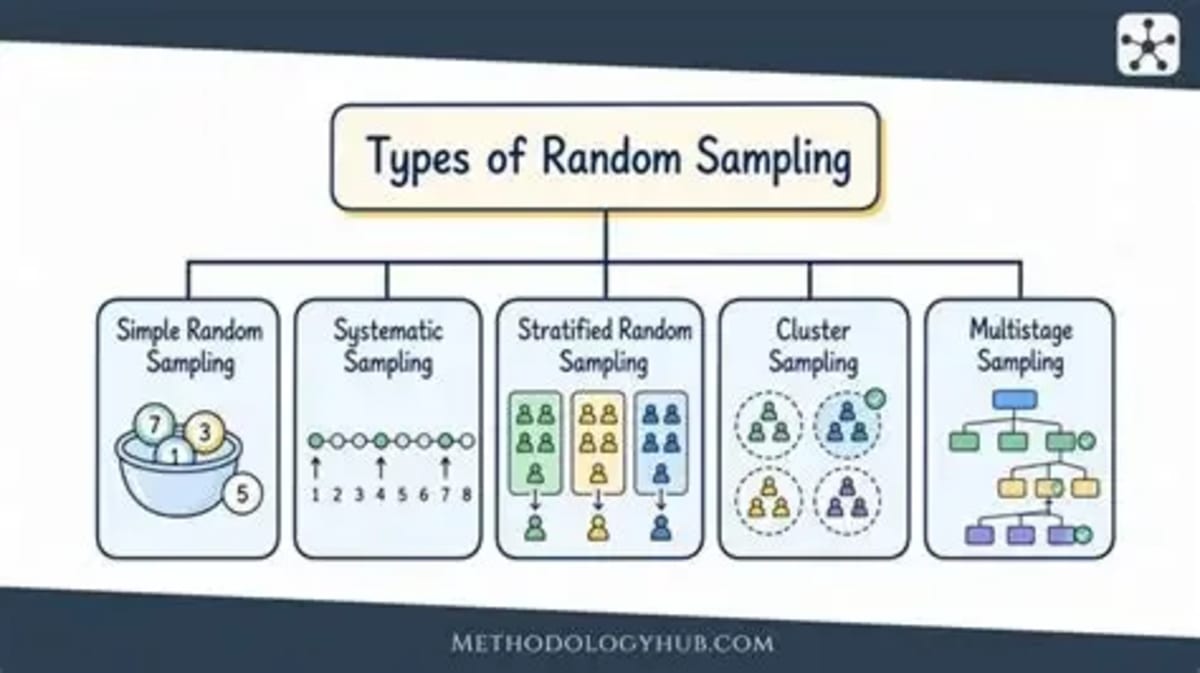
The way you pick participants decides what you are allowed to conclude. A result from a well-drawn sample can be generalised. A result from a convenient one often cannot.
Probability sampling
Every member of the population has a known, non-zero chance of selection. This is what lets you estimate sampling error.
- Simple random: everyone has an equal chance. Best when you have a complete list of the population.
- Stratified: split the population into groups (for example region or age band) and sample within each. It protects small groups from being missed.
- Cluster: sample whole groups such as villages or schools. Cheaper to field, but less precise.
- Systematic: pick every k-th person from a list after a random start.
Non-probability sampling
Selection depends on access or judgement. It is faster and cheaper, but you cannot compute a true margin of error.
- Convenience: whoever is easy to reach.
- Purposive: people chosen for specific knowledge or experience.
- Snowball: participants refer others. Useful for hard-to-reach groups.
- Quota: fill set numbers per group without random selection.
Choosing between them
If you need to report a number for a whole population, use a probability design. If you are exploring ideas, testing a questionnaire or studying a small community, a non-probability sample can be the right tool as long as you state its limits.
Be honest about limits
Describe how participants were chosen, who might be missing and how that could bias results. Readers trust studies that say what they cannot show.