
How to Design a Reliable Survey: A Practical Guide for Researchers
Clear questions, a sensible sample and a pilot test are what separate a useful survey from noise. Here is a practical way to get all three right.
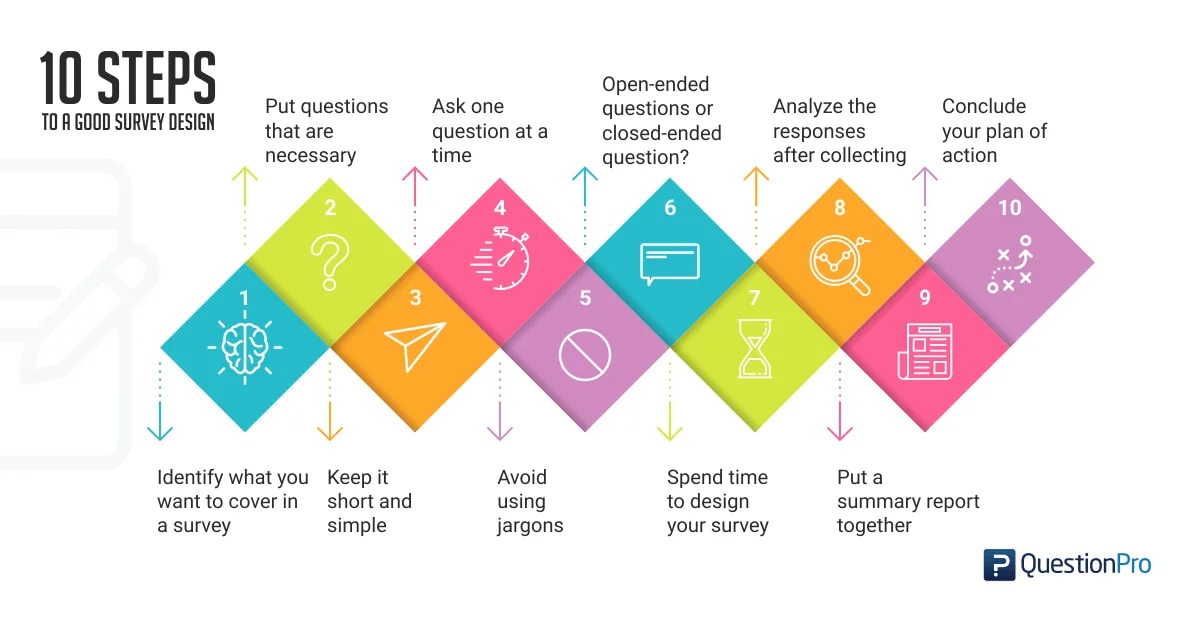
A survey is only as good as its questions. Even a large sample cannot rescue a questionnaire that people misread, so most of the work happens before a single response comes in.
Start with the decision, not the questions
Write down what you will do with each answer. If a question does not feed a decision or a hypothesis, cut it. Shorter surveys get higher completion rates and cleaner data.
Write questions people can answer
- Ask about one thing at a time. "How satisfied are you with the price and quality?" is two questions.
- Use plain words and avoid jargon your respondents may not share.
- Keep scales consistent. If 1 means "strongly disagree" in one block, it should not mean the opposite in the next.
- Offer "not applicable" or "prefer not to say" where an honest answer might not fit the options.
Watch for leading wording
Compare "How helpful was our excellent support team?" with "How would you rate our support team?". The first pushes people toward a positive answer and inflates your results.
Pilot test with a small group
Run the survey with 10 to 20 people who resemble your target group. Ask them to think aloud while answering. Note where they hesitate, skip or ask what a word means, then fix those items.
If a respondent has to re-read a question, the question needs rewriting.
Plan the analysis before you launch
Decide how each question will be coded and reported. This catches problems such as open-ended answers you cannot summarise, or categories that are too broad to compare.
With a clear purpose, plain questions and a pilot round, your survey will give you data you can trust and defend.